Why Automated Translation Fails Technical Documentation
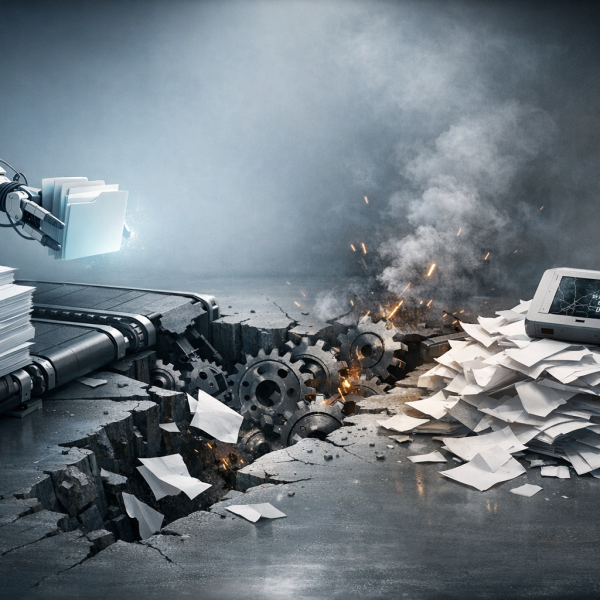
Automated translation tools promise instant results, lower costs, and effortless global communication. For casual content, they often work well enough. But when it comes to highly specialized user manuals, safety instructions, engineering specs, and software documentation, these tools consistently fall short. Technical documentation demands precision, reliability, and domain expertise that generic algorithms simply cannot guarantee. That gap between “good enough” and “absolutely correct” is exactly where automated translation fails – and where professional linguists become indispensable.
1. Lack of Domain Expertise Leads to Critical Errors
Technical documentation is written for engineers, technicians, operators, and end users who rely on precise terminology to perform complex tasks. Automated systems do not truly “understand” the subject matter; they match patterns statistically. When a word has multiple meanings depending on industry, context, or technology stack, machine translation is likely to pick the wrong one. In technical environments, such errors are not minor – they can cause malfunctions, safety incidents, or product misuse.
A professional linguist with engineering or IT background recognizes when “bearing” is a mechanical part, when “load” is an electrical parameter, or when “port” refers to a network interface. This level of situational awareness is essential for accurately translating installation guides, maintenance procedures, and configuration manuals. Automated systems treat all topics generically, which is exactly why they often fail where precision matters most.
2. Inconsistent Terminology Damages Product Reliability
Consistent terminology is the backbone of high-quality technical documentation. A single component, function, or command name must appear exactly the same every time it is mentioned across manuals, quick-start guides, UI strings, and online help centers. Automated tools frequently produce multiple translations for the same term, especially when processing large content sets over time or in different file formats.
This inconsistency confuses readers and undermines trust in the documentation. It also complicates internal processes like support, training, and warranty handling. Professional providers offering technical translation services build and maintain terminology databases and translation memories that ensure every critical term stays consistent across all languages and document versions.
3. Poor Handling of Complex Formatting and Layout
Technical documentation is rarely plain text. It includes tables, diagrams, numbered procedures, cross-references, inline code, variables, and safety icons. Automated tools often break this structure, introduce misplaced line breaks, or disrupt numbering and references. The result can be a layout that is both confusing and error-prone, especially in PDF manuals, DTP files, or structured formats like XML, DITA, and HTML.
When instructions rely on a specific order of steps, a misaligned bullet or a mismatched heading can lead users to skip crucial actions. Professional technical translators work with specialized CAT tools and DTP workflows that preserve formatting, layout, and structure, ensuring the translated version mirrors the original at both content and design levels.
The practical consequence is that a translated manual usually needs a second pass in the layout file, not only in the text. Desktop publishing and typesetting sit as their own service line at PoliLingua, and knowing that in advance stops the rebuild from arriving as an unplanned cost at the end of a project. Ask early which side owns the final PDF, because that is where responsibility tends to go unassigned.
4. Safety and Compliance Risks Are Too High
Many industries operate under strict standards and regulations: medical devices, automotive, aerospace, heavy machinery, industrial automation, and more. Safety instructions, hazard warnings, and legal disclaimers must meet regulatory requirements in every target language. A mistranslated warning label or incorrectly localized safety notice can expose companies to legal liability, product recalls, or banned imports.
Automated translation cannot guarantee regulatory compliance or conformance with standards like ISO, IEC, or industry-specific directives. By contrast, specialized technical language service providers understand applicable regulations, use approved terminology sets, and often collaborate with subject matter experts or in-country reviewers to validate the final text.
5. No Context Awareness in Hardware and Software Documentation
Technical content often comes in small chunks: UI elements, error messages, dialog boxes, tooltips, and code comments. Automated engines see only isolated strings, not the full interface or workflow in which the text appears. This leads to mistranslations of buttons, commands, and system messages that confuse users and disrupt usability. Mentors often play a big part in someone’s career development over the years.
Professional translators request screenshots, demos, or access to staging environments so they can see how each term is used in context. This contextual understanding is crucial for correct translations of menu hierarchies, navigation labels, and configuration options, especially when space is limited or truncation is a risk.
Automated output reads plausibly and fails specifically, which is the hardest kind of error to catch by inspection alone. Technical documentation makes this worse because the reader is usually mid-task and cannot easily tell a bad instruction from a merely confusing one. Watching somebody actually follow the steps is the only reliable check, which is precisely what usability testing provides.
6. Difficulty Handling Industry-Specific Jargon and Neologisms
Technical fields evolve quickly. New technologies, frameworks, components, and methodologies appear every year, often with brand-new names or specialized jargon. Automated tools lag behind these developments because they rely on pre-existing data. As a result, they may translate proprietary terms, trademarks, or product names when they should remain unchanged, or they may guess incorrect equivalents for brand new concepts.
Human experts follow industry news, attend trade shows, read standards, and interact with client engineering teams. They know when to localize a term, when to leave it in English, and when to follow local industry conventions. This nuance is essential in areas like cloud computing, cybersecurity, medical imaging, robotics, or renewable energy technologies.
7. Inability to Manage Version Control and Long-Term Consistency
Technical documentation is rarely static. It changes with every product release, firmware update, or new feature rollout. Teams must track multiple versions, manage change logs, and synchronize updates across all localizations. Generic automated translation engines do not maintain project-level memory, version control, or historical consistency unless carefully integrated into a broader localization workflow.
Professional technical translation workflows include translation memories, glossaries, and change tracking processes. When a paragraph is updated, only the modified segments are retranslated, preserving previous approved content and ensuring that manuals for version 2.0 build logically on version 1.0, no matter the language.
8. Hidden Costs Outweigh Initial Savings
Automated translation appears inexpensive at first glance, but the hidden costs can be significant. Internal engineers and support staff end up spending time clarifying unclear instructions, rewriting auto-translated passages, or managing customer complaints caused by misunderstandings. In severe cases, incorrectly translated documentation can lead to equipment damage, downtime, or safety incidents that cost far more than proper translation would have.
When companies factor in post-editing, reprints, updated releases, and support overhead, they often discover that relying on automated tools was a false economy. Investing in specialized technical translators from the beginning usually results in lower total cost of ownership and higher customer satisfaction.
Conclusion: For Technical Documentation, Accuracy Is Non-Negotiable
Automated translation has its place in fast, informal communication, but it is not suitable for mission-critical technical documentation. The lack of domain expertise, inconsistent terminology, structural problems, and serious safety and compliance risks make automation alone a dangerous shortcut. When users depend on your manuals and instructions to assemble equipment, operate complex systems, or maintain industrial assets, every word matters.
Organizations that take documentation seriously know that professional linguists with technical backgrounds are not a luxury; they are a necessity. By partnering with specialized providers, you ensure accurate, consistent, compliant, and user-friendly documentation in every target language. The result is lower support costs, fewer errors, greater user confidence, and stronger global brand reputation.